A problem in the church?
What happens when prominent Christian believers get it wrong?
'Jesus answered: "Watch out that no one deceives you"'. (Matt. 24:4)
Now the Berean Jews were of more noble character than those in Thessalonica, for they received the message with great eagerness and examined the Scriptures every day to see if what Paul said was true. (Acts 17:11)

RELIGION and Politics are the traditional taboo topics to be avoided in polite dinner party conversations. Both of these subjects invite and involve very strong opinions and beliefs. However, and in terms of the positions any individual might hold, there is a very fine line between legitimate/unshakeable conviction and that of stubborn dogmatism 1. And this raises the question of when and if to change one’s view.
”Have you never changed your mind? I’d like to read that book!”
Not long before the most-recent UK General Election, Nigel Farage did a U-turn in choosing to stand for a seat in parliament, rather putting his energies into supporting Donald Trump in the latter's presidential ambitions. One hostile mainstream media interviewer aggressively challenged Farage: “So you have changed you mind then?” The underlying intent, as it seemed, was to present NF as an indecisive character: a man not sure on things, including major decisions in his own life. But the newly-appointed leader of the Reform Party - immediately and robustly – moved straight onto the front foot and left the media inquisitor speechless. “ Have you never changed your mind? I’d like to read that book!” Meanwhile Winston Churchill was of the view: "Those who never change their minds, never change anything.”
Personally, I have a great respect and admiration for anyone who is prepared, when fresh insights or new information emerge, to perform a Volte-Face: not least on an issue of real substance. Of course the interviewer's above-mentioned inference is that in so doing the person who has changed position was previously wrong. And, by extension, if they were wrong on one important issue, the question then arises whether they were wrong on other matters of equal weight?
However the positive interpretation of an alteration in thinking is that the individual who has come to a different view and admitted it, is someone who is open to reason; and honest and ethical enough to adjust their thinking when the prevailing evidence and facts suggest that they need to do so.
Regarding the political domain the contemporary scene is forever a moving feast. By way of contrast and in terms of Christian belief, the word of God is eternal and utterly unchanging. However that can not be said of the range interpretations drawn from it. And herein lies a great problem for and within the believing church.
A problem for some?
Before his downfall a man's heart is proud, but humility comes before honour. (Prov. 18:12)
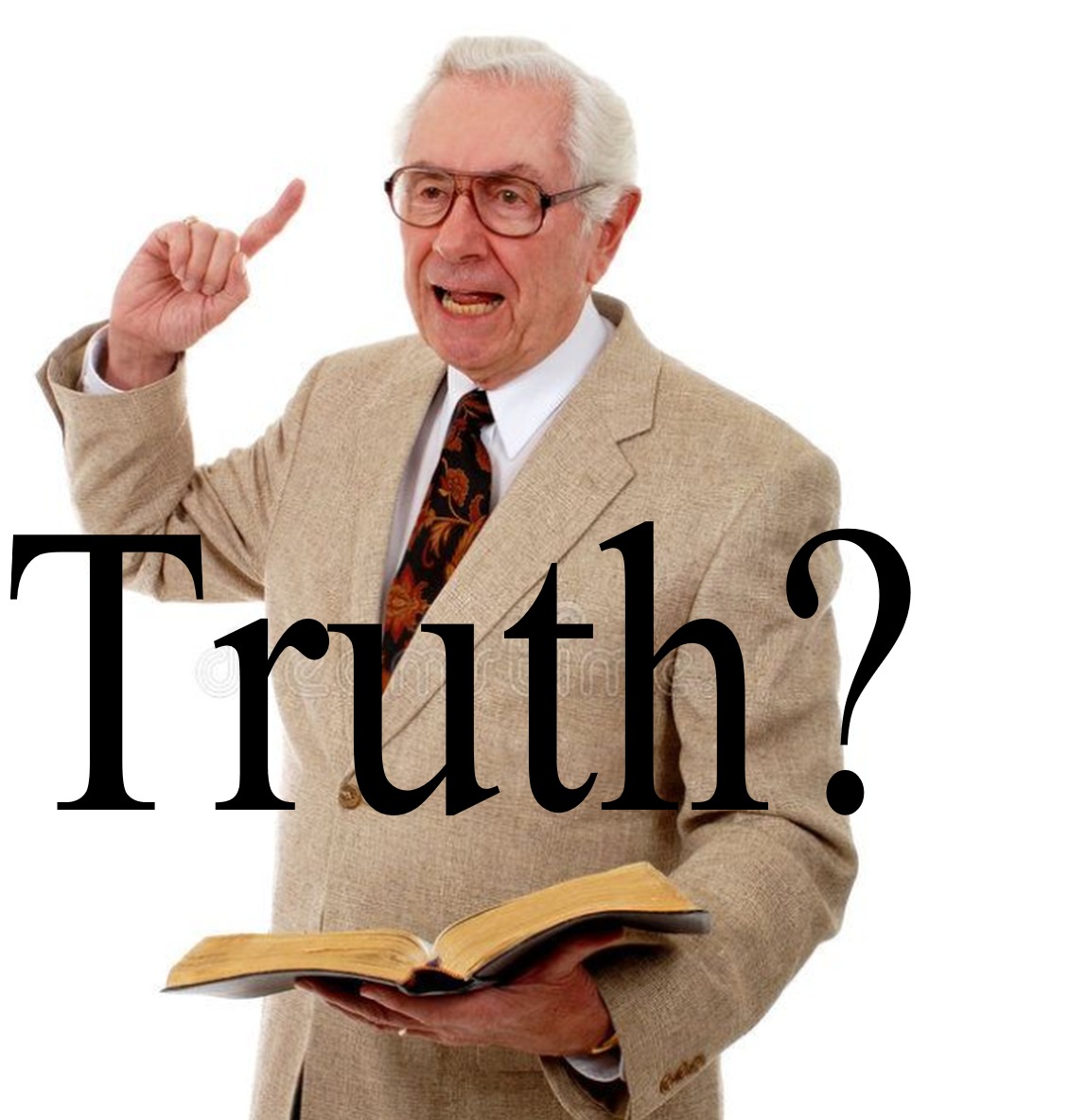 A FEW years back I was speaking with a Christian friend when we found ourselves in discussion about the events of Passion Week. I mentioned that I had studied the subject at a degree of depth, and had come to the view that the traditional 'Friday Crucifixion' story didn't stack up. My research (always up for question) suggested to me that Christ was crucified in the middle of the week2. A FEW years back I was speaking with a Christian friend when we found ourselves in discussion about the events of Passion Week. I mentioned that I had studied the subject at a degree of depth, and had come to the view that the traditional 'Friday Crucifixion' story didn't stack up. My research (always up for question) suggested to me that Christ was crucified in the middle of the week2.
My friend mentioned that he knew a Christian believer in mainland Europe who had looked at this issue also, and suggested that I be in touch with him. Accordingly I sent an e-mail with a copy of this page to the believer concerned. (I'll call him Neville.) Having sent Neville an e-mail with my thinking attached, I waited to see if he would reply; and he did. Quite quickly in fact. However on reading the e-mail, it was not at all what I was expecting.
The message carried such a blistering response that it just about burnt out my computer screen. I was rather shocked and totally puzzled. Why would a perfect stranger be so angry with someone (in this case yours truly) whom he had never known or met? So I did a little a little research.
I came to discover that Neville was a very well known figure in Christian circles and he had some time earlier published a very thick book on the subject of the timing of the Crucifixion. In itself that was not a problem. The problem, and it seemed to be a really big one for Nevil, ultimately became clear. While I had come to the conclusion that Christ died on Wednesday, Neville, in his heavyweight tome, put the day as being Thursday. But Hey: Christians differ over different things, don't they? And the timing of the crucifixion is one of them. So what caused the rush of anger?
"Faced with the choice between changing one’s mind and proving that there is no need to do so, almost everyone gets busy on the proof." (attrib. Prof. J.K. Galbraith)
It was at this point I felt that the root problem of the above-mentioned scenario emerged; and it certainly wasn't and is not confined to the above-mentioned encounter. Neither was or is it confined to a secondary and debatable matter such as the timing of Christ's death3.
In fact, and on reflection, I sensed that the underlying issue was and remains a huge problem: a very serious danger within the church and in any age. It relates to the apparent inability or unwillingness to come to and accept a different view from that which has been previously espoused. The economist Prof. J. K Galbraith put it this way:
"Faced with the choice between changing ones' mind and providing that there is no need to do so, almost everyone gets busy on the proof."
"Faced with the choice between changing one’s mind and proving that there is no need to do so, almost everyone gets busy on the proof."
Regarding the Word of God, I think we can reasonably say that there are five elements in our search for understanding. I suggest the following: -
-
Some things in Scripture are beyond question: these doctrines are fundamental to our faith.
-
Then there are important matters on which we can be very substantially certain.
-
Beyond that, there are some things we do not really need to know. (Deut. 34:6)
-
Then there are, in the prophetic scriptures mainly, some out-workings which will only be fully understood when they occur (Dan. 12:4; Acts 2:16).
-
And of course some things will only be fully revealed to us in glory (1 Cor. 13:12).
The aforementioned danger, as I see it, manifests when preachers/teachers/authors interpret passages incorrectly; or go ahead and beyond that of which Scripture makes clear at any one time, and later end up being shown to have been wrong. This situation is particularly evident when we encounter Bible teachers/preachers who have an over-realised interpretation of eschatology and future events: running ahead of how precisely God will outwork His prophetic purposes.
"Without that humility the error persists, and the person who got it wrong becomes dogmatic and unteachable".
The syndrome becomes a very real problem indeed when any of the above-mentioned ministry figures have – over a period and in a very public way – written, and/or taught on a topic which falls into the fourth category above, and their views and teachings are later seen to be in error. How do they then respond?
The first to present his case seems right, till another comes forward and questions him. (Prov. 18:17)
The need for humility
To admit to error may be feared as being a huge blow to the ego and reputation. And I suspect it could have been the reason why Neville replied so angrily to what was a polite approach from a perfect stranger. How could he possibly countenance a view that differed from his own: not least when he had published it in a very substantial book?
If someone is shown to be in error and humbly admits "I got it wrong", most of us will have an increased respect for that person; not a lower one. Scripture informs us: "The fear of the Lord is the instruction of wisdom; and before honour is humility" (Prov. 15:33)
However, without that humility the error persists; and the person(s) who got it wrong runs the risk of becoming dogmatic and unteachable. Those who display such characteristics then become a very real danger to the body of Christ and contribute substantially to the deception which Jesus and the apostles so strenuously warned us about.
Surely we are all obliged to constantly 'be Bereans' (Acts 17:11) - checking everything; diligently searching for truth; and indeed at a personal level also. The believers in Berea adopted the correct approach in critiquing what Paul had said4. If that dynamic reveals error then the godly and humble response should be to honestly admit the error. It is surely a step which the Lord will honour.
---------------------
Notes:
1. Punning on the 'U turn' metaphor, Margaret Thatcher is remembered (inter alia) for her statement. "You turn if you want: the lady's not for turning."
2. See left margin on this article for Passion Week chronologies.
3. The essential issue is not 'the day' but rather the realisation that Christ's crucifixion was taken place just as the sacrificial sheep were being slaughtered.
4. So often those who take a contrary view insist on doubling-down on their own opinions rather than critically examining the alternative view.
|
 Print
Print